
Tactical duty boots are tactical footwear designed for police officers, Gendarmerie personnel, security agents and military personnel. Rugged and all-terrain, they provide solid foot support and freedom of movement whatever the weather conditions.
Technical innovations and the use of new materials have made it possible to improve these boots, which could once be uncomfortable to wear. Manufacturers have thought of everything to make them easier to put on, take off and wear.
Choosing the right pair is essential, otherwise you risk discomfort or injury during a mission. That is why the GK team has put together this guide to help you find the tactical duty boot that suits you.
How to choose your tactical duty boots?
Today, for every mission in uniform, police officers and gendarmes have suitable duty models available. Each one has its own specific features: style, material, weight, height, closure type and sole…
Which model for a plain-clothes or uniformed mission?
While the combat boots style is still going strong, there are many more ergonomic and lightweight boot variations available. While still complying with regulations, they can be worn just as easily with duty trousers as with jeans.
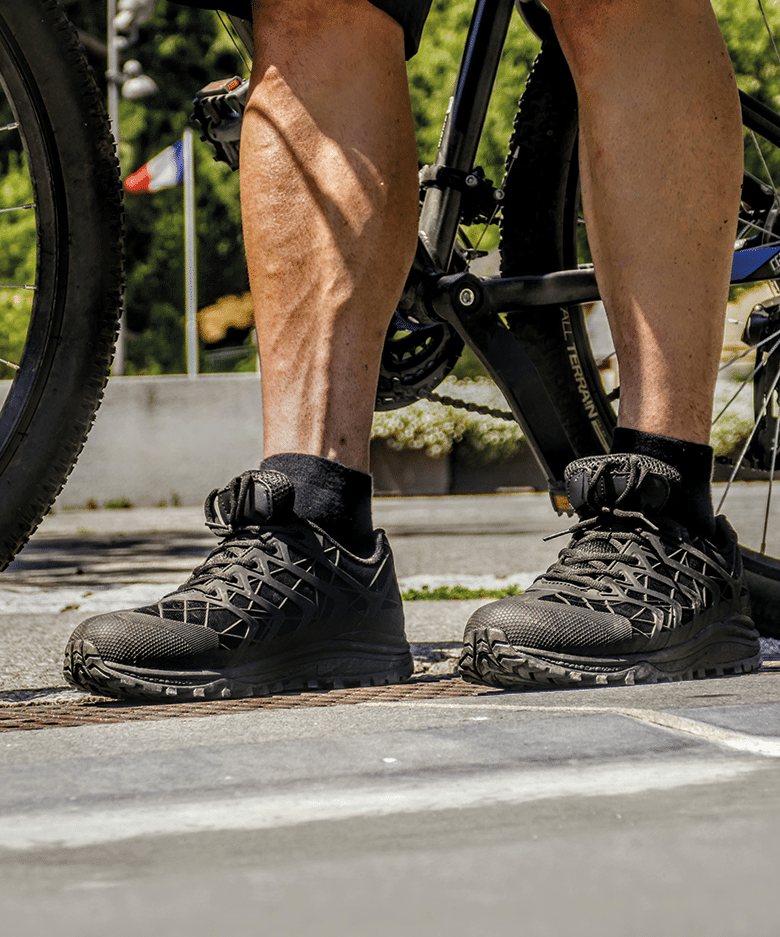
Sneakers, with their urban, sporty look, are ideal for plain-clothes missions.
So the first criterion when choosing a model is the mission in the field: it will determine the style of tactical footwear you need.
After that, it is a matter of taste and comfort. Those who do a lot of walking will favour a flexible, comfortable boot. Others, who may have to run more often, will opt for high-top boots to properly support their ankles.
Which material should you choose for lighter boots?
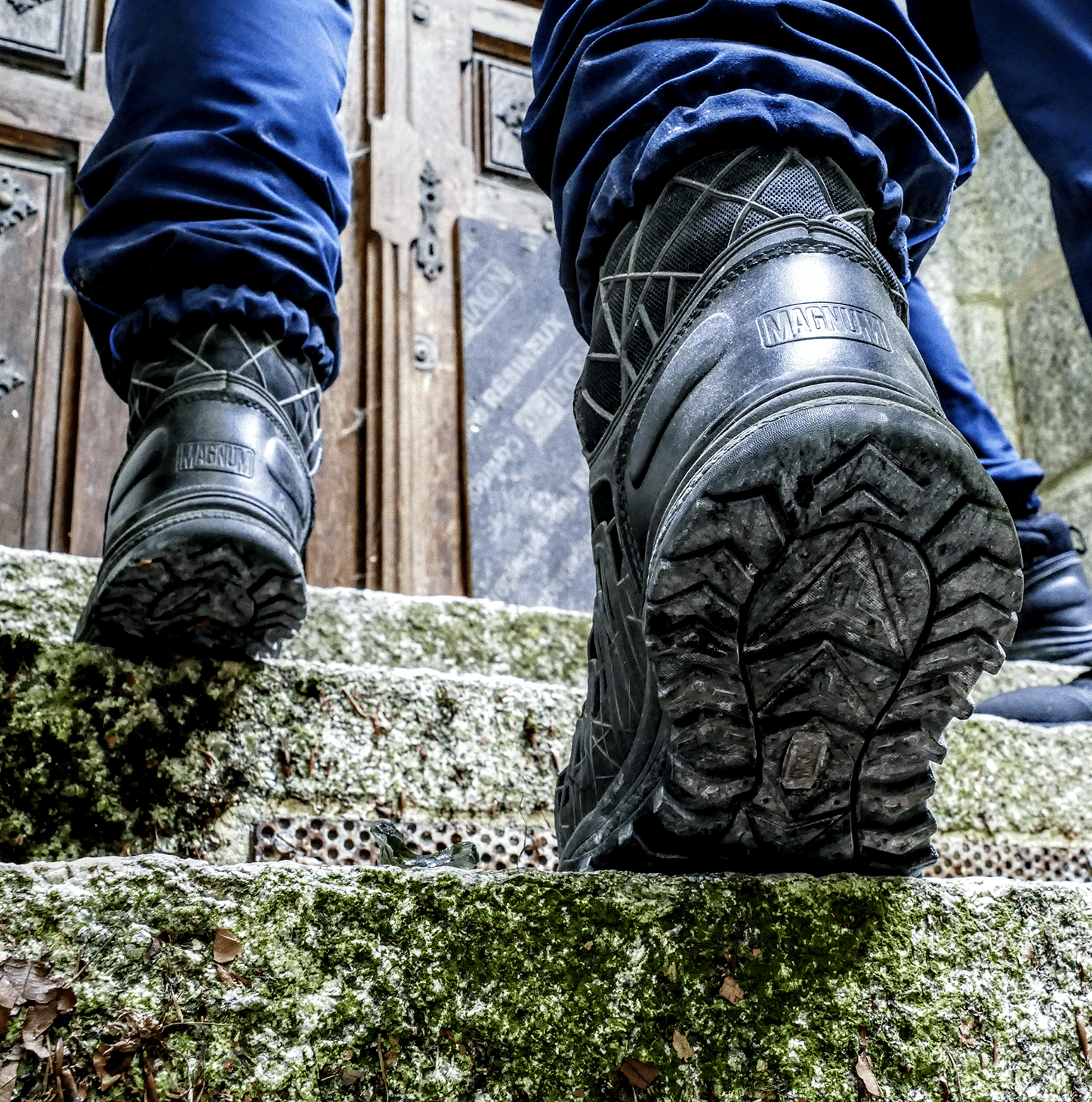
Footwear resistance to the demands of the field is essential. The use of synthetic materials has made it possible to develop a new generation of boots that are easier to wear.
Gone are the days of 100% leather pairs which, while durable, were heavy. Most manufacturers now combine the properties of leather — insulating, breathable and rugged — with those of nylon: absorbency, flexibility and elasticity. The result: boots are lightweight as well as rugged and comfortable. The Magnum Lynx Plus 8.0, in full-grain leather and canvas, weigh far less than classic combat boots: 1,150 g versus 1,900 g. Users wear them with much greater ease.
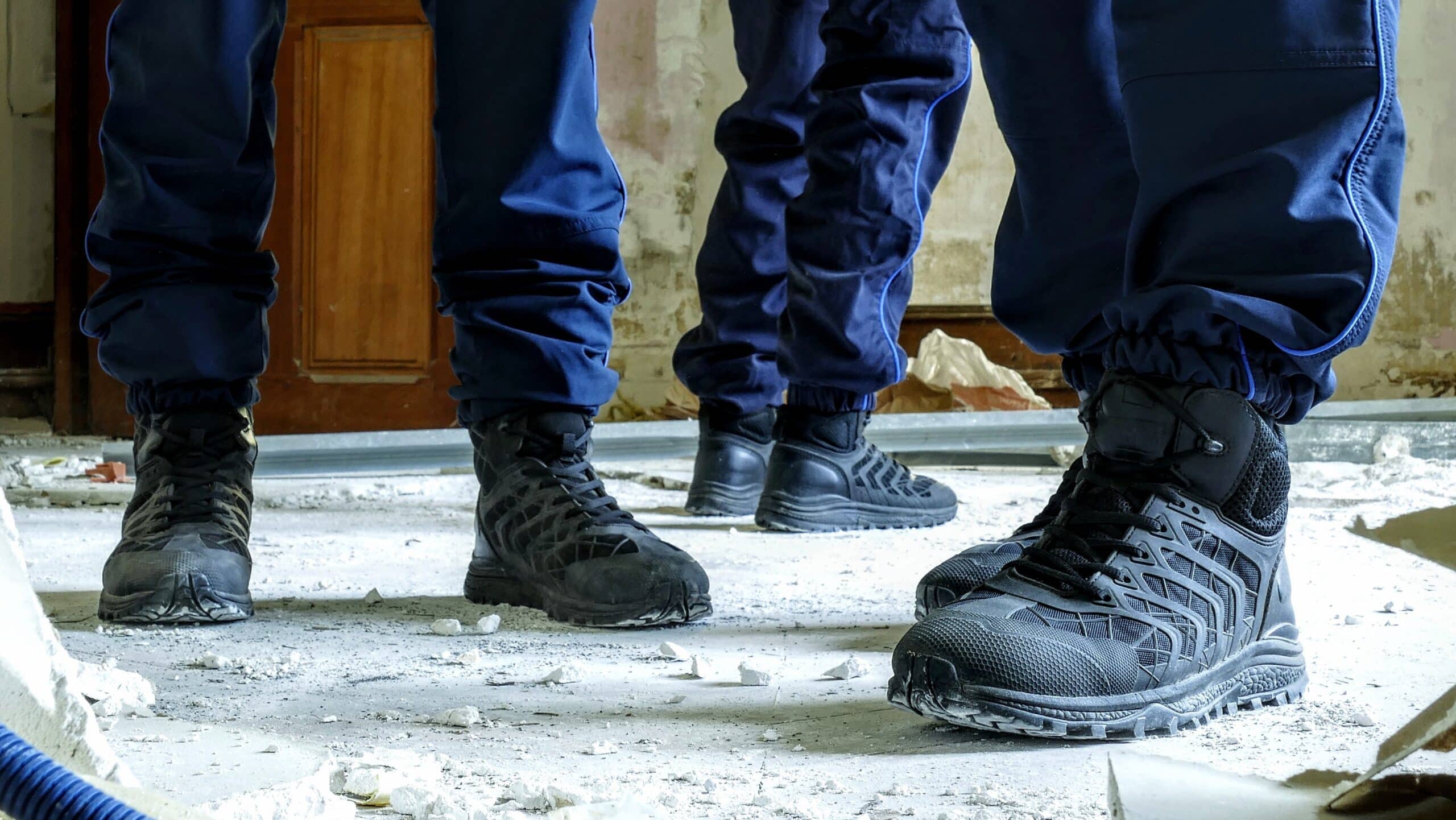
For even more lightness and dynamism in your movements, we also offer the MAGNUM ULTIMA PRO RC 8.0 SZ WP, whose upper is made entirely from recycled polyester. As well as being environmentally friendly, this material makes it possible to achieve a record weight (535 g per foot!) while still offering a waterproof, breathable membrane.
Which sole for optimal comfort?
Choosing tactical duty boots is much like buying a pair of running shoes, where particular attention is paid to the sole. Why? To protect the knees and support the foot over the long haul.
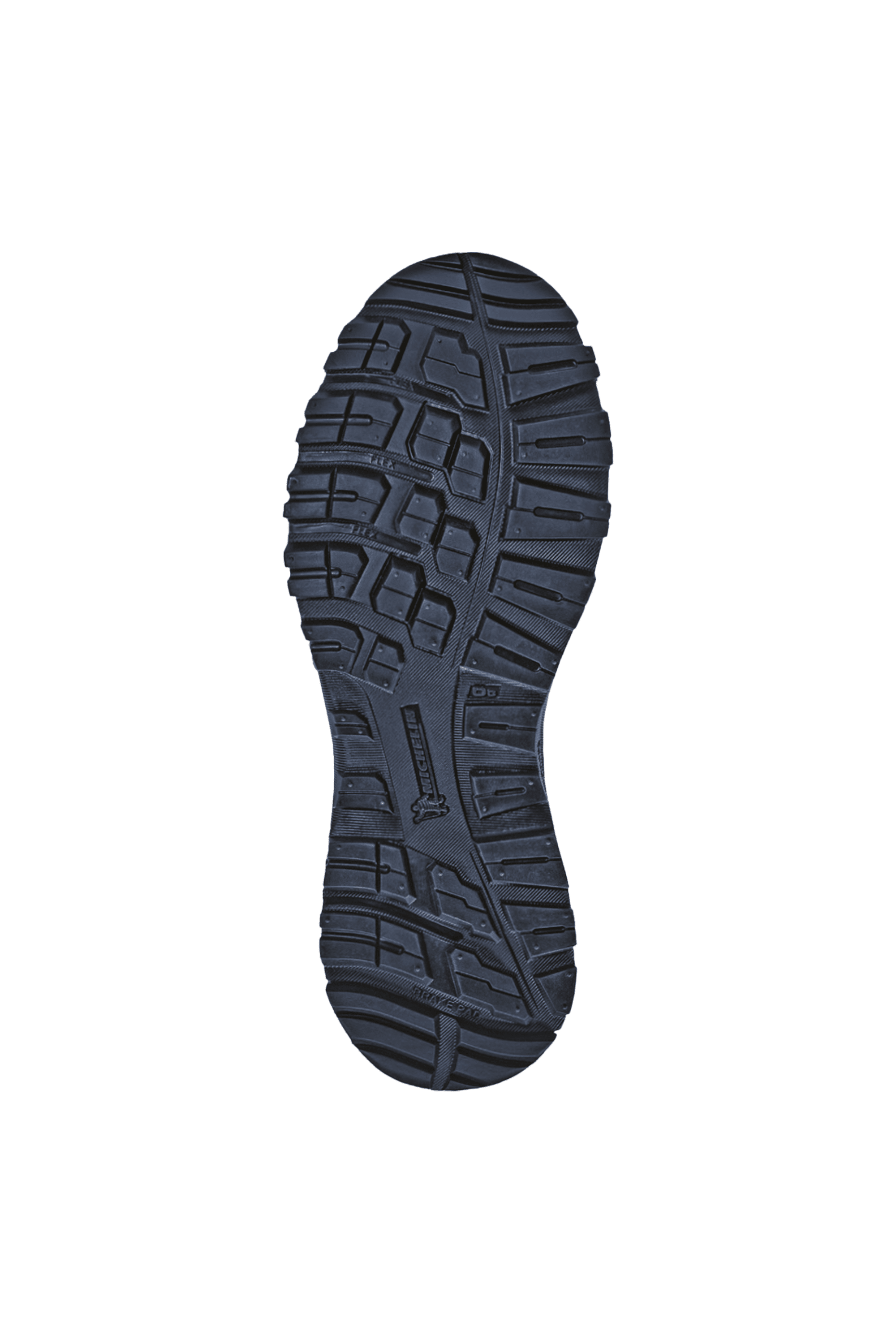
In direct contact with the ground, the sole must provide good grip, absorb impacts and support the foot.
The 3 layers it is made of:
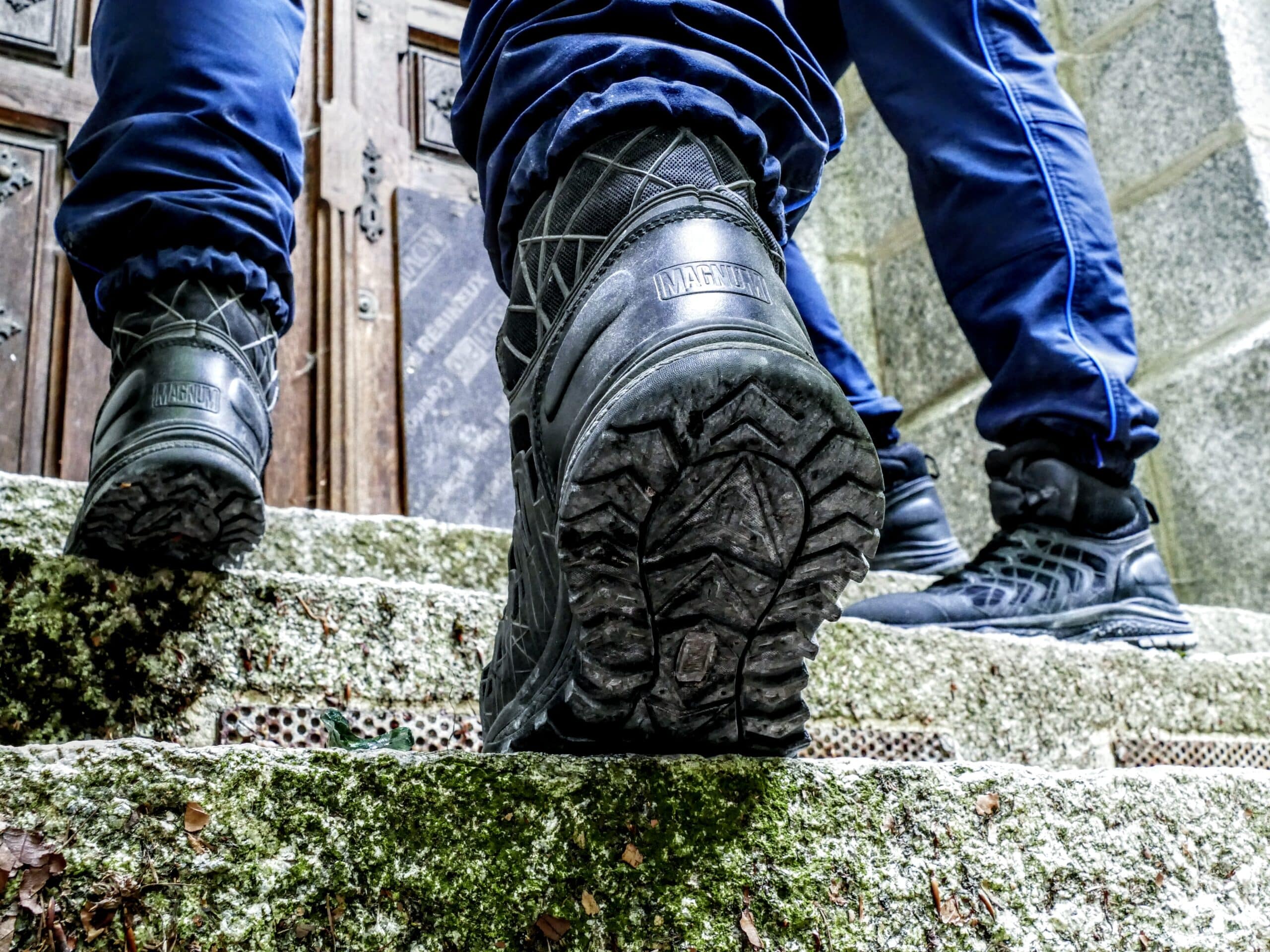
- The outsole, or wear layer, with rubber or polyurethane lugs. Its role: grip, stability and shock absorption. It provides optimal thermal insulation and must be non-slip. This is where the first signs of wear appear. With Magnum boots, you can be sure you are choosing quality. All models feature a lugged MICHELIN® carbon rubber outsole.
- The midsole sits on the outsole and is attached to the upper. Often made of EVA foam or gel, it absorbs shocks and retains heat.
- The insole, or footbed, ensures foot comfort. For good support, memory foam is ideal. It can be treated with anti-mould and AEGIS antibacterial agents.
For even greater comfort, you can add a removable insole that ensures support and good foot breathability. In this case, our advice is to go one size up from your usual size, so that the foot is not compressed.
Which is more practical: zip or laces?
The obvious answer would be the zip, but technological advances have brought improvements.
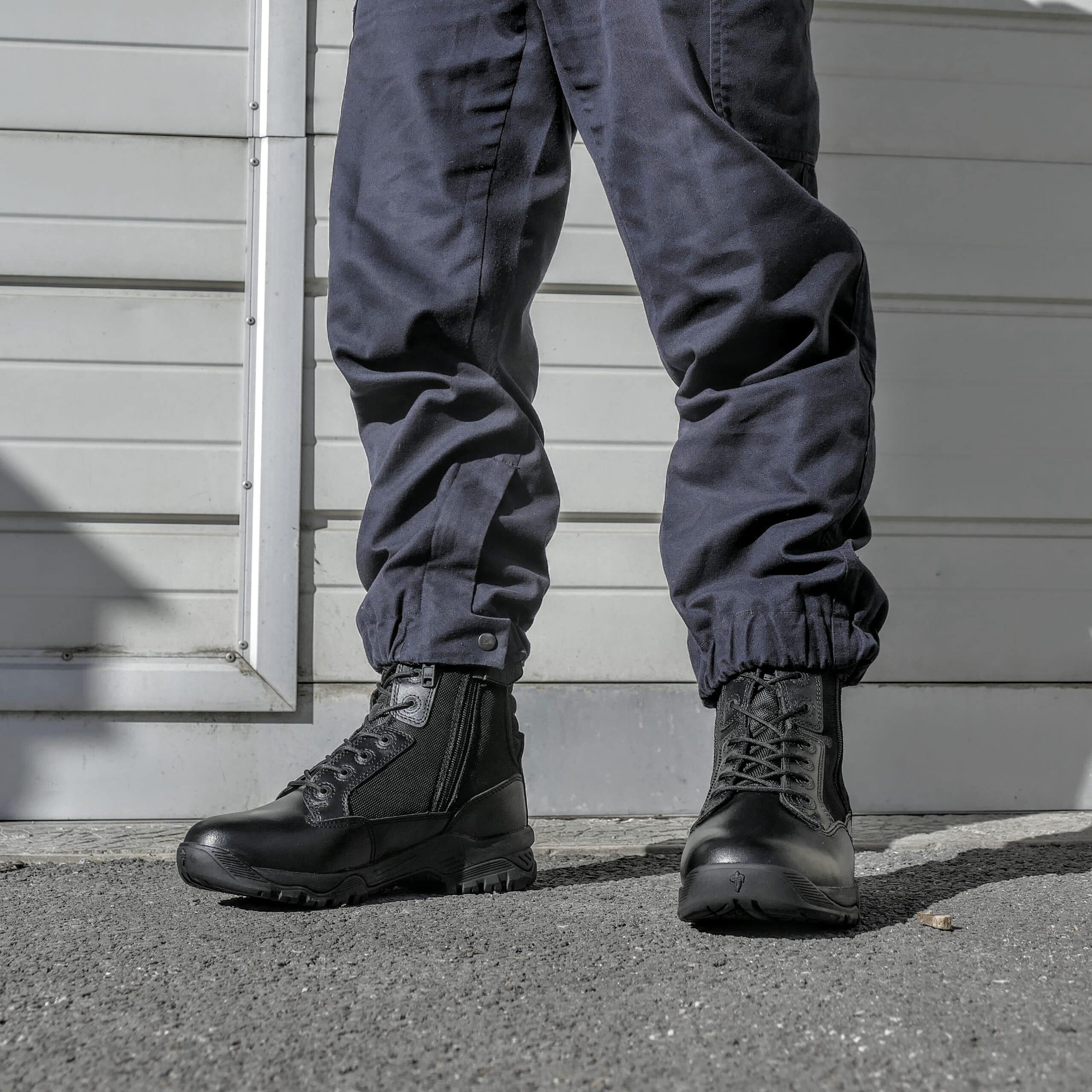
The days when putting on and taking off boots took time are over. Technical innovations such as pull tabs and ZIPS make it easier to slip the boot on and close it. With a single movement, your boot is closed or opened, and it features a Velcro flap to keep the closure in place.
More hard-wearing, nylon laces have replaced cotton laces. The risk of breaking a lace is low. On the Lynx, Spider and Ultima RC ranges, Magnum offers locking eyelets on the upper part of the boot shaft, ensuring proper foot support.
Metal toe cap or foam reinforcement?
One of the primary functions of tactical duty boots is their ability to withstand violent impacts. There are several types of toe caps with varying levels of resistance: steel, aluminium or composite. So choosing a metal toe cap or not will have an impact on the boot's weight and its level of protection.
How to clean your tactical duty boots?
Daily care of your boots will extend their lifespan.
First of all, it is recommended to dust the boot with a soft cloth.
If there is dried mud, scrub it with a stiff-bristle brush, then clean the top with a sponge and lukewarm water to remove any remaining dirt. Let dry naturally, avoiding heat sources: radiators, hairdryers, direct sunlight.
If the boot is damp inside, let it dry naturally. Newspaper is a good way to absorb moisture: simply crumple it into a ball and insert it into the boot.
Before polishing, applying a moisturising cream or a wax with a dauber brush will nourish the leather. Once dry, polish and buff with a cloth, a stocking or a buffing brush.
At the end of the cleaning process, applying a waterproofing product helps maintain the quality of the boot.
How to avoid blisters with your tactical duty boots?
A blister can be seriously debilitating. It occurs because of:
– friction,
– overheating,
– temperature,
– damp socks
– boots that are too wide or too tight.
Choosing the right tactical footwear can prevent blisters. It must be suited to the shape of your foot (width and arch shape).
Wearing boots in your size
It is therefore advisable to choose a pair in your size, or one size up, in which you place an insole to support the foot. Make sure the foot and toes can move, but not too much.
Go for quality socks
It is recommended to wear breathable technical socks to keep your feet dry. Some models are anti-blister, with reinforcement in sensitive areas. Opt for seamless socks with no elastic. They promote good blood circulation thanks to their acupressure design, which massages the arch of the foot.
Test them before prolonged use
When tactical duty boots are new, it is best to break them in gradually before prolonged use. To do this, take walks around your neighbourhood for at least 24 hours of wear. This exercise helps you identify friction areas where blisters may appear.
If, despite all these precautions, a blister does appear, treat it immediately with a cotton pad and an antiseptic lotion, then apply a "second skin" dressing.
Now you can browse our selection of tactical duty boots and choose the model that suits your needs. Log in, it's worth a look!