
Feeling safe, anywhere and at any time, is a concern for many people in France. With the ever-growing need to protect oneself in an emergency situation, self-defense, or legitimate defense, is enjoying genuine success.
Recognized as a means of defense under criminal law in several countries, it is also a concept of public international law according to which every person is entitled to guard against an unjustified assault. Beyond the legal framework, the term also covers a great many basic defense techniques and the weapons associated with them.
Bringing together the fundamentals of self-protection through a simple and effective method, self-defense is the solution for staying safe at all times, without having to become a martial arts expert.
But what exactly does it involve? What are the different disciplines out there? How do you choose your club or instructor? What equipment should you use to practice this discipline effectively? And finally, what are the fundamental techniques to know? Here is an overview of this fascinating discipline.
Contents
Self-Defense: what is it really?
Framework and definition
Self-defense covers all the techniques and methods that allow you to protect yourself in the face of a physical assault.
These techniques draw on several disciplines and are designed to be used by anyone, regardless of their physical level or experience in martial arts.
In very practical terms, self-defense aims to provide the tools needed to anticipate potentially dangerous situations, defuse a conflict before it turns violent or, if necessary, fend off an attacker. It is important to remember that the main objective remains personal safety and not victory over an opponent.
Beyond that, it should be stressed that self-defense is not limited to physical confrontation. It also encompasses a major psychological dimension: learning to stay calm in stressful situations, building self-confidence and the ability to make sound decisions quickly under pressure.
Legal framework and prevention
Remember that self-defense must always remain within the legal framework. In France, the law allows anyone to defend themselves against an assault, but stipulates that the response must be proportionate to the assault received.
In all cases, non-violent and peaceful solutions should be favored as far as possible: getting away remains the best way to avoid a confrontation.
Finally, self-defense generally places the emphasis on prevention. This may involve learning to avoid risky situations in the first place or effectively understanding human behavior in order to better identify potential warning signs of a threat.
Self-defense is not just a series of techniques or reactive actions, but rather a proactive, comprehensive approach to personal safety.
The right equipment for Self-Defense
In addition to body techniques, certain accessories can prove useful in a self-defense context.
Defense batons
One commonly used tool is the defense baton. It can be particularly effective for keeping an attacker at a distance and defending yourself without resorting to excessive force. Discreet and lightweight, these batons can easily be carried in a handbag or jacket pocket.
They come in several forms: the tonfa – traditionally used by law enforcement –, the telescopic baton, or the kubotan – a small stick held in the palm of the hand. The choice between these different options mainly depends on personal preference and how comfortable you feel with each of them.
A well-handled defense baton allows you both to reach an attacker at a distance and to inflict enough pain to stop an attack. It can therefore offer significant protection without requiring the level of physical strength demanded by certain self-defense techniques.
Our tips for choosing your defense baton
Would you like to know how to choose your defense baton? It depends on your specific needs and on the legislation in force in your area. Here are a few tips for choosing a defense baton wisely:
- Define your purpose: Think about how you intend to use your defense baton. Is it for personal self-defense, professional security, or the practice of a specific sport? Your needs will guide your choice.
- Quality and reliability: Opt for a quality defense baton made by a reputable brand. It must be strong, durable and hard-wearing so that it works properly when you need it.
- Size and portability: Make sure the defense baton is easy to carry and use. A size suited to your build and to how you carry it is important.
- Training: If you have no prior experience using a defense baton, consider taking proper training. Learning the right techniques is essential to use it effectively and safely.
- Grip and comfort: Choose a defense baton with a non-slip grip for a secure hold. Comfort during use prevents fatigue and injury.
- Consult an expert: If you have any doubts or questions, don't hesitate to consult a security expert or contact the GK sales department. We can provide you with information specific to your situation.
Regulations in force
One question comes up often: Can you carry a defense baton on you?
In France, possessing and carrying a telescopic baton are governed by law. Telescopic batons are classified in weapons category D, which means they may legally be sold, but their possession and carrying are strictly regulated.
Under article R. 311-1 of the French Internal Security Code, carrying and transporting category D weapons is generally prohibited unless a legal justification can be established. Legitimate grounds include, in particular, the practice of a profession or a sporting activity that requires the use of a telescopic baton, as is the case for police officers or certain Private Security companies.
If you are checked by the police or the Gendarmerie and explain that you are carrying a weapon because you are afraid of being attacked or because you want to be able to react in the event of an assault, this does not constitute legitimate grounds. Only the law enforcement officer can decide, based on your explanations, whether you have a valid reason to carry a defense weapon on you.
Defense sprays
Defense sprays can temporarily immobilize an attacker by blinding them or causing breathing difficulties.
Several types are available on the market, the most widespread being tear gas and pepper sprays.
These sprays work by irritating the respiratory tract and the eyes: they cause a strong burning sensation and a temporary inability to open the eyes, thereby allowing the victim to get away.
One important point: these products must be used with care and in strict compliance with the law.
Moreover, buying such a device does call for some thought. It is essential to choose a model that complies with the legislation in force in your country and that is suited to your personal needs (product size, type of active agent, etc.).

Martial arts, at the heart of self-defense
Martial arts are many and offer a wide variety of styles. While each has its own specific features, most of them are used in learning self-defense.
Krav Maga
Originating in Israel, Krav Maga is a self-defense system recognized for its effectiveness in real-life situations. The techniques are direct and based mainly on strikes to vital points.
It also teaches you to defend yourself against grabs and armed attacks.
Brazilian Jiu-Jitsu
This martial art style focuses on ground control techniques and submissions.
It is particularly effective when an attacker tries to pin you to the ground.
Aikido
Aikido is a Japanese martial art whose main objective is not to destroy the opponent, but to neutralize them.
The techniques are essentially based on circular movements that allow you to use the opponent's own strength against them.
Wing Chun
This is a Chinese martial art focused on self-defense. It is characterized by fast, fluid movements designed to unbalance and then quickly neutralize the opponent.
Taking up these different combat sports offers a multitude of benefits. Easy to memorize, they not only teach us to master the skills needed for our protection, but are also extremely useful for managing your emotions and stress in general.
After several weeks of practice, the benefits become significantly noticeable. Tension gives way to unparalleled peace of mind, which will help you face everyday challenges.
Even though these disciplines require a certain amount of inner work to overcome the fear of confrontation, they equip you with the right reflexes, unquestionably increasing your confidence and self-assurance.
Basic self-defense techniques
Striking effectively
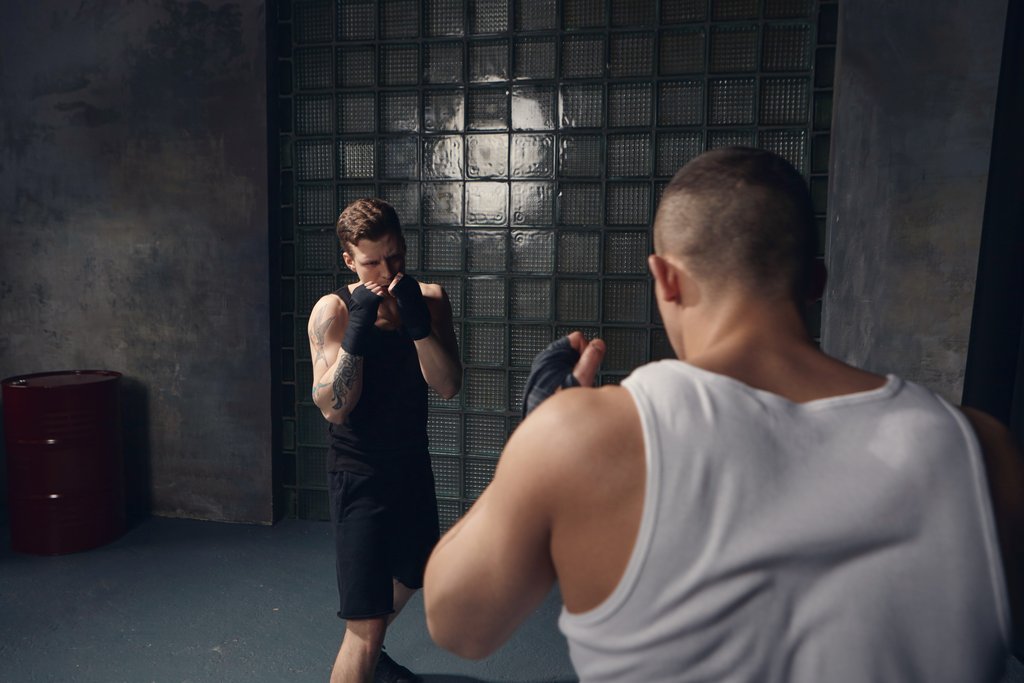
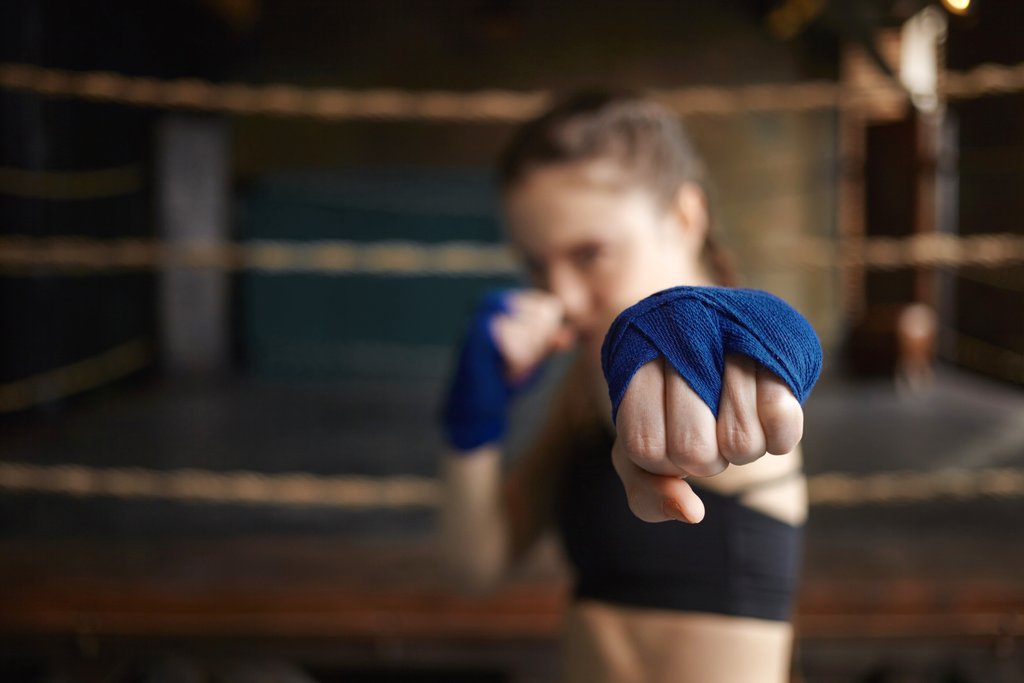
First of all, you need to know how to strike. The goal is not so much the power of the blow as its accuracy and effectiveness.
Sensitive areas such as the nose, throat, eyes or knees can be targeted to quickly stop an attacker. Among other techniques are the straight punch, the palm strike and the knee strike.
Protecting yourself
Another important principle: knowing how to protect yourself. This means not only avoiding attacks, but also knowing how to minimize the impact when an altercation is unavoidable.
In self-defense, you will learn to use your arms to block direct attacks or to dodge a blow in order to avoid the impact.
Disarming your attacker
Handling a situation in which an attacker is armed is another key skill acquired in self-defense.
Contrary to what you might think, you don't need great physical strength to successfully disarm someone. It is more a matter of learning to divert the attacker's attention and use their own energy against them.
For example, if someone threatens you with a knife, the first thing you must do is try to stay calm and assess your options – escape if possible, or confrontation if necessary. If you do have to face the attacker, you will need to deflect the knife's trajectory while staying out of reach. Once the blow has been parried, you can attempt to disarm your attacker.
These techniques require solid knowledge of the basic principles and a great deal of practice to be effective. It is therefore strongly recommended to follow specific, regular training to master them.
Managing your stress
In an emergency situation, our body often reacts with stress or fear. That is why self-defense focuses on managing your emotions, to prevent you from becoming overwhelmed in a difficult situation.
You will be taught breathing techniques that will help you slow your heart rate and keep a clear mind so you can make the right decisions.
Don't forget, the mind also plays a major role in learning and applying the techniques we have mentioned.
How do you train in self-defense?
Finding a club or school
To learn self-defense, the ideal solution is to join a specialized club or school. Look for clubs near you and don't hesitate to visit several before making your choice.
Check that the classes are suitable for beginners and that they cover a range of situations: defense against grabs, ground defense and defense against weapons.
Instructors: qualifications, affiliated federations
The instructor's expertise is also an important criterion. Make sure your instructor is qualified and has solid experience in self-defense. They must be able to teach you the techniques correctly while looking after your safety during classes.
Most instructors hold a qualification recognized by a national or international federation. Don't hesitate to ask for information about their background and credentials.
From mastering self-defense techniques to the right tools such as defense sprays or defense batons, every aspect matters.
To truly grasp the scope and depth of this discipline, there is nothing like regular hands-on training. Whatever your situation, remember: you have the right and the power to protect yourself!
