
The ballistic vest, history and evolution
Day in and day out, the ballistic vest (BV) is an essential piece of equipment for law enforcement and the military. Now discreet, comfortable and ergonomic, this ballistic protection has undergone numerous changes over 3,000 years, making it much easier to wear today. To understand the why and the how of today's ballistic vest, GK Pro invites you on a journey into the past.
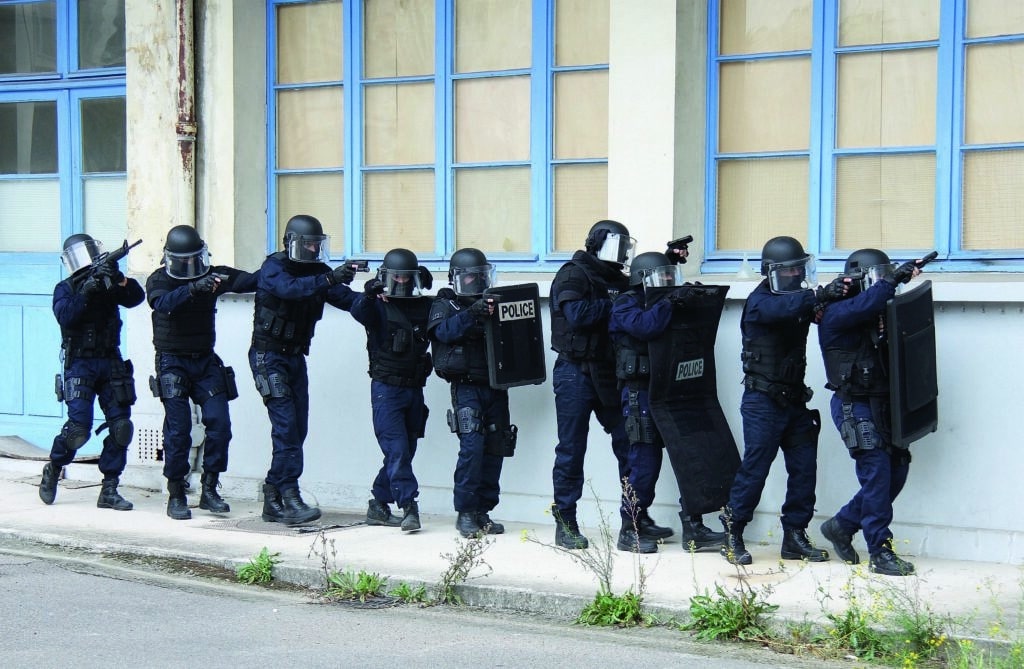
What is a ballistic vest?
A ballistic vest is a piece of ballistic protection equipment, sometimes known as a plate carrier. It protects the chest, back and abdomen against firearm rounds. It acts as a shield against the penetration of a bullet or a small projectile, absorbing the energy of the impact.
Depending on the situations that call for wearing a ballistic vest, there are 2 types of vest:
- The covert vest. Like a second skin, it is worn under civilian clothing or uniforms. Made up of a series of layers of fabric, it is designed to protect against small-calibre weapons.
- The tactical vest. This protection, worn over clothing, is designed for commandos and military personnel in theatres of war. It features several pockets for carrying small items of equipment such as magazines and a first-aid kit. Semi-rigid and rigid, it incorporates hard materials (ceramic and metals) to stop larger-calibre rounds.
Apart from technological advances and the use of more resistant materials, the design of ballistic vests is still based on the same principle. A technique used for the design of the very first vests: layering fabrics on top of one another, with or without rigid plates.
From armour to the ballistic vest: the evolution of personal protection
The need for protection emerged with the shift to a settled way of life around 9000 BC. Fights to defend herds, harvests and territory turned into fierce battles.
Over the centuries and through conflicts, humankind learned to create weapons of war that were ever more effective. At the same time, it had to develop defensive equipment, with varying degrees of success. Thus, depending on the era, a number of materials were tested: bronze, iron, steel, bone, bark, boiled leather, linen, silk, etc. The use of metals had many drawbacks, such as a weight of more than 5 kg, maintenance, cost and the need for bespoke manufacturing.
Techniques from the past that are still relevant today
As early as the 6th century, linen came out on top, delivering exceptional results with the linothorax. This was a cuirass made up of between 10 and 30 layers of compressed fabric. Simple and impenetrable, this protection was capable of stopping 250 joules of energy, the equivalent of a modern .22LR.
Later on, for production reasons, linen was replaced by felted wool. Stitched into layers, it was then treated in a
vinegar bath. A process similar to the current principle behind the manufacture of ballistic protection, with chemical treatment of the fibres.
But it was a Celtic innovation that most resembles today's ballistic vests. It would be in use for more than 1,500 years: chain mail. Combined with a gambeson (a sleeveless quilted vest), this combination offered freedom of movement and effective protection.
The 19th century, the turning point for the ballistic vest
It was in the 19th century that the history of the ballistic vest truly began, with the use of silk. It was Doctor George Emery Goodfellow who discovered the properties of this textile. While treating gunshot victims wearing silk, he noted:
– Its resistance to penetration
– Its light weight
– Its tendency to limit the severity of wounds.
20 years after this discovery, 1909 saw the release of the first silk ballistic vests, although their effectiveness was limited to small calibres. To remedy this, research continued, notably during the two world wars. On the battlefields, soldiers were equipped with steel breastplates or infantry armour, unfortunately bulky and heavy.
Several vest solutions were developed using metal or ceramic plates with padded cotton layers. Their advantage, in addition to performance, was their discreetness. The arrival of nylon offered protection against the handguns of the day. But it was the 1970s that would mark a turning point in personal ballistic protection.
Kevlar, the revolutionary fibre
Kevlar is a synthetic fibre developed in the 1970s by Stephanie Kwolek. Initially designed to reinforce tyres, this material is stronger than steel. The DuPont company then introduced ballistic vests made from this material. They were highly effective against rifles, handguns and grenades. Especially when Kevlar was combined with steel or titanium plates. These first vests are therefore the ancestors of today's vests.
These protections have the particularity of not deflecting bullets. They stop projectiles by absorbing their kinetic energy, redistributing it across the body and deforming the round. At the same time, an all-Kevlar vest was developed by a restaurateur, offering a lighter solution.
The 2000s, a leap towards the armour of the future
Since the 2000s, intensive research and development efforts have made it possible to offer extremely high-performance ballistic protection.
The next generation appears to draw inspiration from the age of knights, with full-body armour covering the face.
Of course, it may well be built from materials combining nanotechnology or genetically modified spider silk. An exoskeleton multiplying the wearer's physical capabilities will be incorporated to offset the still very high weight of this equipment, not to mention mobility.
Until this innovation arrives, national law enforcement services have high-performance protection to face dangerous situations.
The ballistic vest in France
Long reserved for military personnel and commandos, the ballistic vest has today become an essential form of protection for law enforcement. While in the United States police officers had had ballistic vests since the 1980s, French police officers and gendarmes had to wait until 2002.
Before that, wearing a ballistic vest was not mandatory; wearing one was a personal initiative. One day, a police officer was shot at and survived thanks to his covert ballistic vest, a GK model. An incident that changed equipment issue policy, making the wearing of a ballistic vest mandatory.
Indeed, the government decided to issue every police officer with a standard-issue ballistic vest, as well as gendarmes. Since 2014, the ballistic vest has been listed among the equipment authorised for municipal police officers. However, the decision to wear the vest remains at the Mayor's discretion.
Thanks to technological advances, the ballistic vest offers comfort and ideal ergonomics for practising high-risk professions.
Discover all our ballistic vest models — they are well worth a look!
Discover our accessories for your ballistic vest:
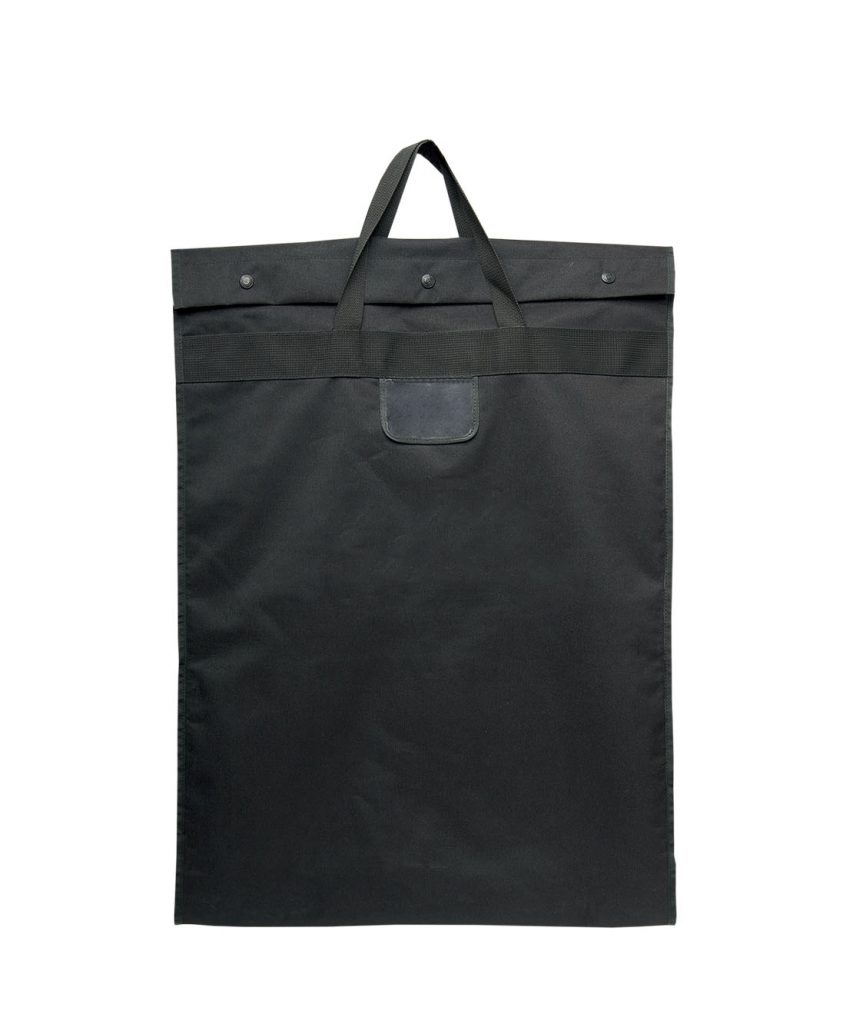
Carry bag for ballistic vest
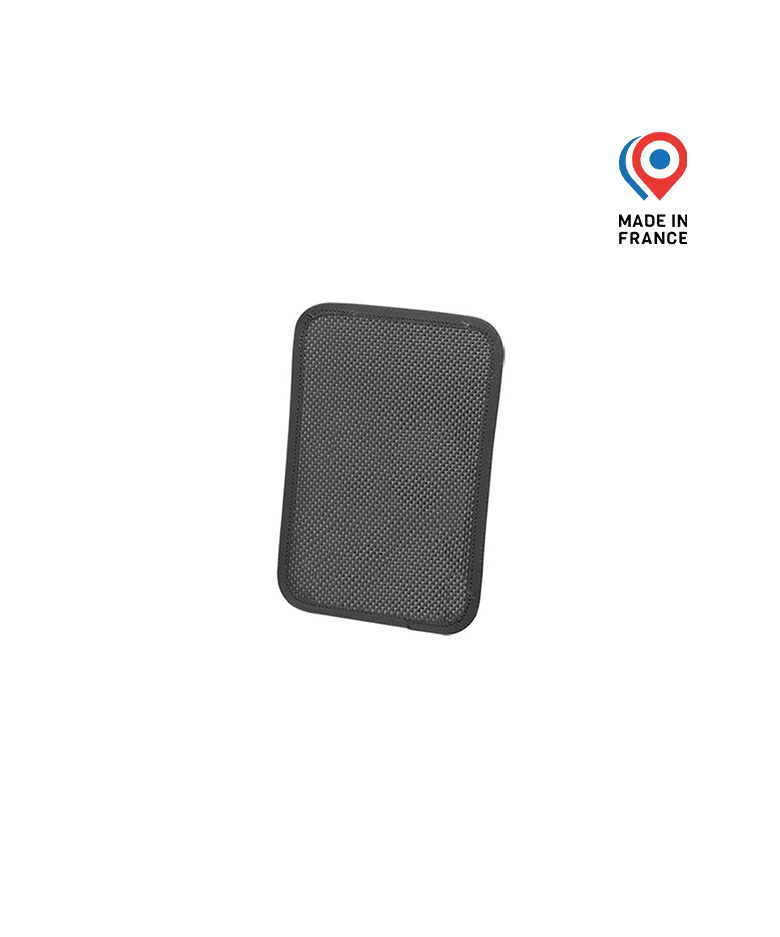
Anti-trauma plate for ballistic vest
Cover for covert ballistic vest